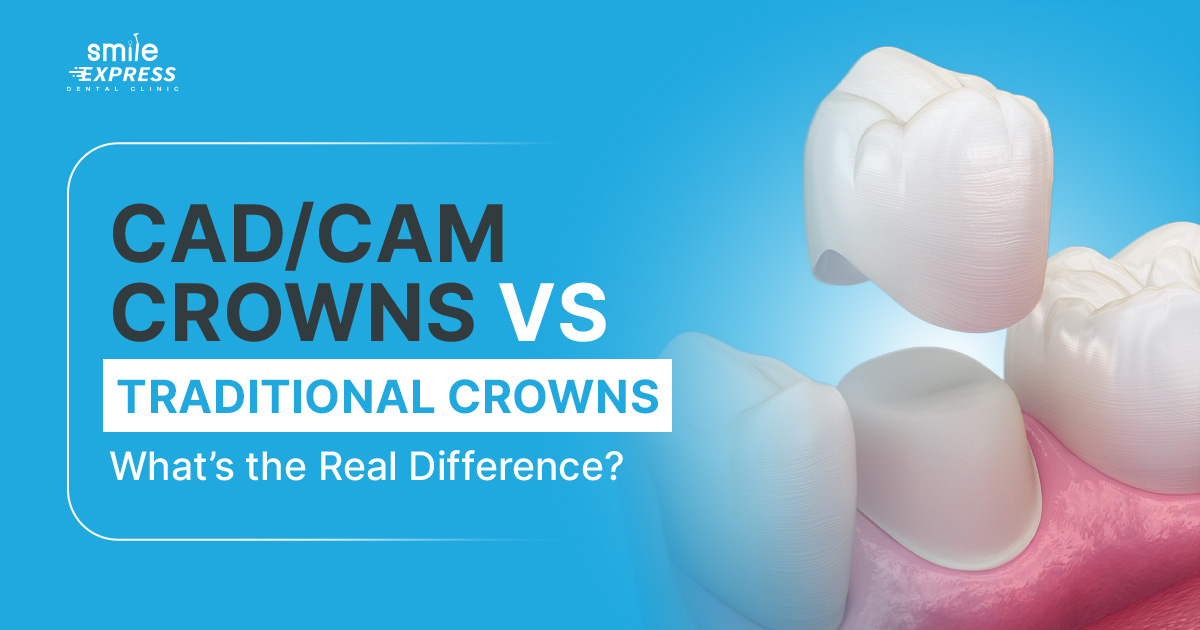
If you need a dental crown, you may come across terms such as digital crowns, CAD/CAM crowns, same-day crowns, or traditional lab-fabricated crowns. While both traditional and CAD/CAM crowns can provide excellent clinical results, the differences lie in workflow, precision, efficiency, and reproducibility.
A dental crown is a custom-made restoration designed to protect and strengthen a damaged tooth. Crowns restore function, improve appearance, and help preserve teeth that have undergone extensive treatment, including root canal therapy.
For long-term success, a crown must fit accurately, align properly with the bite, and seal precisely at the margin where the crown meets the natural tooth. Poorly fitting crowns may contribute to gum irritation, decay beneath the crown, bite discomfort, and long-term complications.
Why Precision Matters in Dental Crowns
The success of a dental crown depends on more than appearance alone.
An accurately fabricated crown helps:
- Protect the underlying tooth structure
- Maintain healthy gums
- Support proper chewing function
- Improve long-term durability
- Reduce the risk of future complications
Whether the crown is created using traditional methods or digital technology, precision remains one of the most important factors in treatment success.
Impression Method: Traditional Impressions vs Digital Scanning
One of the biggest differences between traditional and CAD/CAM crowns is how information is captured.
1. Traditional Impression Techniques
Traditional crowns typically require physical impression materials to create a mold of the teeth.
This process has been used successfully for many years and remains widely utilized around the world.
2. Digital Intraoral Scanning
CAD/CAM workflows use digital intraoral scanners to capture detailed three-dimensional images of the teeth.
Digital scanning offers several potential advantages:
- Greater patient comfort
- No impression material discomfort
- Reduced distortion from movement or air bubbles
- Faster information transfer
- Improved digital record storage
Digital impressions can often improve consistency and streamline the treatment process.
Fabrication Process: Laboratory Techniques vs CAD/CAM Milling
The manufacturing process differs significantly between the two systems.
1. Traditional Crown Fabrication
Traditional crowns may involve:
- Manual waxing
- Layering techniques
- Casting procedures
- Multiple laboratory steps
These methods rely heavily on the experience and artistic skill of the dental technician.
2. CAD/CAM Crown Fabrication
CAD/CAM crowns are designed using specialized computer software and manufactured using precision milling technology.
Benefits of digital fabrication may include:
- Standardized production
- Improved consistency
- Precise marginal fit
- Reduced variability
Digital milling can improve reproducibility while maintaining high levels of accuracy.
Turnaround Time: Which Option Is Faster?
Treatment time is often an important consideration for patients.
1. Traditional Crowns
Traditional laboratory-fabricated crowns often require one to two weeks of production time before final placement.
2. CAD/CAM Crowns
Digital CAD/CAM crowns can often be completed more quickly.
In some cases, treatment may be completed within several days, and certain systems may even allow same-day crown delivery.
For international patients traveling for treatment, reduced turnaround time may help shorten the overall treatment schedule.
Material Differences Between CAD/CAM and Traditional Crowns
The materials used may vary depending on the fabrication method.
1. Traditional Crown Materials
Traditional crowns may include:
- Porcelain-fused-to-metal (PFM)
- Layered ceramic restorations
- Other laboratory-crafted materials
2. CAD/CAM Crown Materials
CAD/CAM systems commonly utilize:
- Monolithic zirconia
- Lithium disilicate ceramic
These materials are often milled from solid ceramic blocks, which may improve strength, durability, and consistency.
Material Selection Matters More Than Technology
Different materials serve different clinical purposes.
- Monolithic zirconia is known for durability and fracture resistance.
- Lithium disilicate offers excellent aesthetics and translucency.
Choosing the right material is often more important than choosing a specific manufacturing workflow.
When Traditional Crowns May Still Be Preferred
Despite advances in digital dentistry, traditional techniques remain valuable in certain situations.
Complex aesthetic cases may benefit from:
- Advanced porcelain layering
- Customized characterization
- Highly artistic laboratory craftsmanship
In selected cases, traditional laboratory techniques may still provide advantages for achieving highly individualized cosmetic results.
Which Option Is Better for International Patients?
For overseas patients, CAD/CAM dentistry offers several practical advantages.
Potential benefits include:
- Fewer appointments
- Faster turnaround times
- Digital record storage
- Reduced risk of remakes
- Greater workflow efficiency
However, successful treatment still depends on:
- Accurate diagnosis
- Proper tooth preparation
- Appropriate material selection
- Careful treatment planning
Both CAD/CAM and traditional crowns can produce excellent long-term outcomes when used appropriately.
The Best Crown Is the One Planned Correctly
The question is not whether CAD/CAM crowns are better than traditional crowns.
The real question is whether the crown has been planned, designed, and fabricated appropriately for the patient’s individual needs.
Digital dentistry has improved efficiency, consistency, and predictability. However, technology alone does not guarantee success.
A well-planned crown—whether produced through CAD/CAM technology or traditional laboratory techniques—should feel comfortable, function properly, and last for many years.
Book an Online Consultation
Considering a dental crown in Thailand? Our experienced dental team can assess your case, explain the differences between CAD/CAM and traditional crowns, and recommend the most suitable treatment option for your needs: https://www.dentalsmilebangkok.com/contact-us/