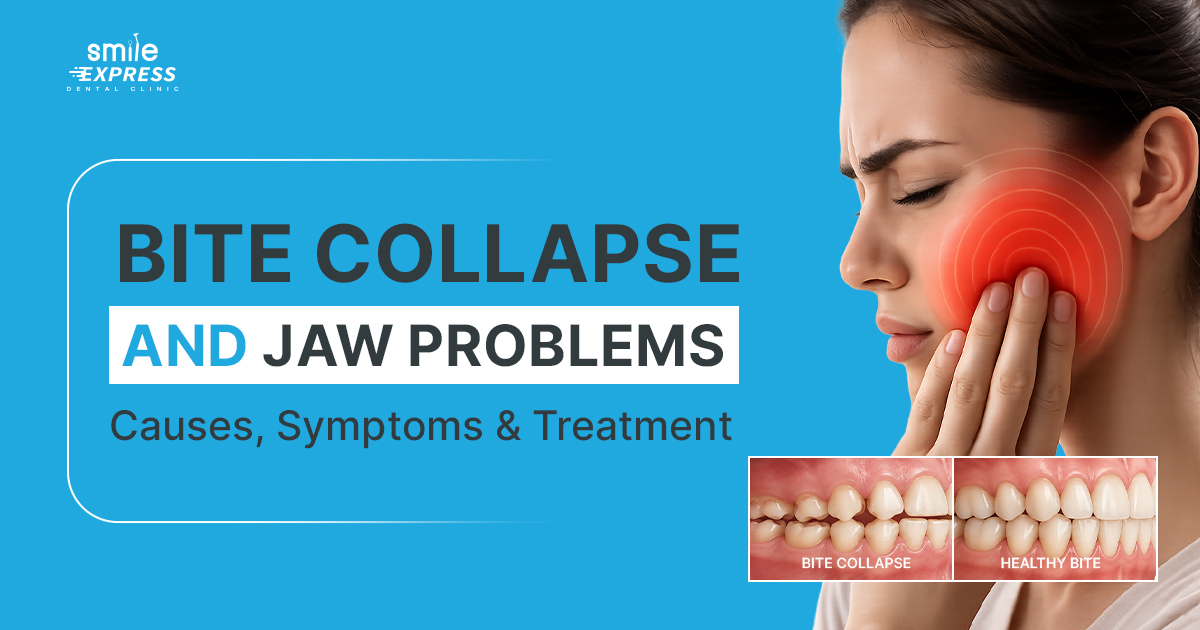
Many patients believe dental problems affect only individual teeth. In reality, the mouth functions as a complete system. When the bite becomes unstable—whether due to missing teeth, severe tooth wear, or long-term imbalance—the entire system can begin to break down.
This condition is commonly known as bite collapse or occlusal collapse.
Bite collapse is not simply a problem of worn teeth. It can affect:
- Jaw joints
- Chewing muscles
- Bite function
- Facial appearance
- Overall oral stability
Understanding the causes and warning signs of bite collapse can help patients seek treatment before more serious complications develop.
What Is Bite Collapse?
A healthy bite distributes chewing forces evenly across multiple teeth.
When this balance is disrupted, the entire system begins to compensate.
Bite collapse occurs when the natural relationship between the upper and lower teeth is lost.
This can lead to:
- Reduced vertical dimension
- Uneven chewing forces
- Overloading of specific teeth
- Muscle strain
- Jaw joint stress
Because the process often develops gradually, many patients do not recognize the problem until symptoms become more significant.
Common Causes of Bite Collapse
Several factors may contribute to bite collapse over time.
1. Long-Term Missing Teeth
When missing teeth are not replaced, neighboring teeth may drift and opposing teeth may over-erupt into the empty space.
This changes the way the bite functions and distributes force.
2. Severe Tooth Wear
Excessive wear caused by:
- Teeth grinding
- Clenching
- Acid erosion
can gradually reduce tooth height and affect overall bite stability.
3. Uneven Chewing Patterns
Favoring one side of the mouth for chewing can place excessive stress on certain teeth and muscles, contributing to imbalance over time.
4. Long-Term Bite Imbalance
Small bite discrepancies may worsen gradually and eventually affect the entire oral system.
Signs and Symptoms of Bite Collapse
Because bite collapse develops slowly, symptoms are often overlooked during the early stages.
Common signs include:
- Shortened front teeth
- Difficulty chewing efficiently
- Jaw clicking or popping
- Muscle fatigue
- Frequent headaches
- Tooth mobility
- Repeated crown fractures
- A sensation that teeth no longer fit together properly
In more advanced cases, facial changes may also become noticeable.
Facial Changes Associated with Bite Collapse
Patients may experience:
- Thinner lips
- Increased wrinkles around the mouth
- Reduced lower facial height
- Premature facial aging
These changes occur because the vertical dimension of the bite gradually decreases over time.
How Bite Collapse Affects the Jaw Joint (TMJ)
As bite balance changes, the position of the jaw joint may also shift.
The muscles surrounding the jaw often compensate for the imbalance, leading to increased strain and inflammation.
Common TMJ-Related Symptoms
- Clicking sounds
- Popping sensations
- Jaw locking
- Pain when opening the mouth
- Limited jaw movement
- Muscle tension around the face and neck
While not all TMJ problems are caused by bite collapse, unstable occlusion is a common contributing factor.
How Dentists Diagnose Bite Collapse
Accurate diagnosis requires more than simply examining individual teeth.
A comprehensive evaluation may include:
- Full-mouth X-rays
- Clinical photographs
- Bite analysis
- Measurement of vertical dimension
- Muscle evaluation
- CBCT imaging when indicated
The goal is to understand how chewing forces are distributed throughout the entire oral system rather than focusing only on individual teeth.
Treatment Options for Bite Collapse
Treatment depends on the severity of the condition and the extent of structural damage.
1. Occlusal Adjustment for Minor Cases
In mild situations, selective reshaping of enamel may help improve bite contacts and distribute chewing forces more evenly.
This conservative approach is typically limited to minor discrepancies.
2. Restoring Lost Vertical Dimension
In moderate to severe cases, lost bite height may need to be restored.
This process is often performed gradually using:
- Temporary restorations
- Diagnostic wax-ups
- Bite testing phases
Muscles and jaw joints must be allowed to adapt safely before final treatment is completed.
3. Full-Mouth Rehabilitation
Advanced bite collapse may require comprehensive reconstruction.
Treatment may include:
- Multiple crowns
- Dental implants
- Bite stabilization
- Functional rebalancing
The objective is to restore both aesthetics and function while creating long-term stability.
4. Implant-Supported Reconstruction
When multiple teeth are missing and bone support has been compromised, dental implants may be recommended.
Implants help restore:
- Structural support
- Chewing efficiency
- Force distribution
- Long-term bite stability
Proper implant positioning is essential to avoid recreating the same imbalance that caused the original collapse.
Long-Term Maintenance After Bite Rehabilitation
Successful treatment does not end after reconstruction is completed.
Long-term maintenance is essential for preserving results.
1. Night Guards
Patients who grind or clench their teeth may benefit from a custom-made night guard to protect restorations and reduce excessive forces.
2. Regular Professional Maintenance
Routine examinations and professional cleanings help monitor bite stability and identify potential issues before they become serious.
Long-term success depends on:
- Consistent maintenance
- Bite stability
- Good oral hygiene
- Regular dental reviews
Bite Collapse Is a Whole-System Problem
Bite collapse affects far more than individual teeth.
It can influence:
- Chewing efficiency
- Muscle health
- Jaw function
- Facial appearance
- Long-term oral stability
The earlier bite collapse is identified and treated, the more predictable the outcome is likely to be.
Modern dentistry offers a range of treatment options—from minor bite adjustments to full-mouth rehabilitation—that can restore balance, comfort, and long-term function.
Book an Online Consultation
Experiencing jaw discomfort, worn teeth, chewing difficulties, or signs of bite collapse? Our experienced dental team can evaluate your bite, assess your jaw function, and recommend the most appropriate treatment plan to restore long-term stability and comfortl: https://www.dentalsmilebangkok.com/contact-us/