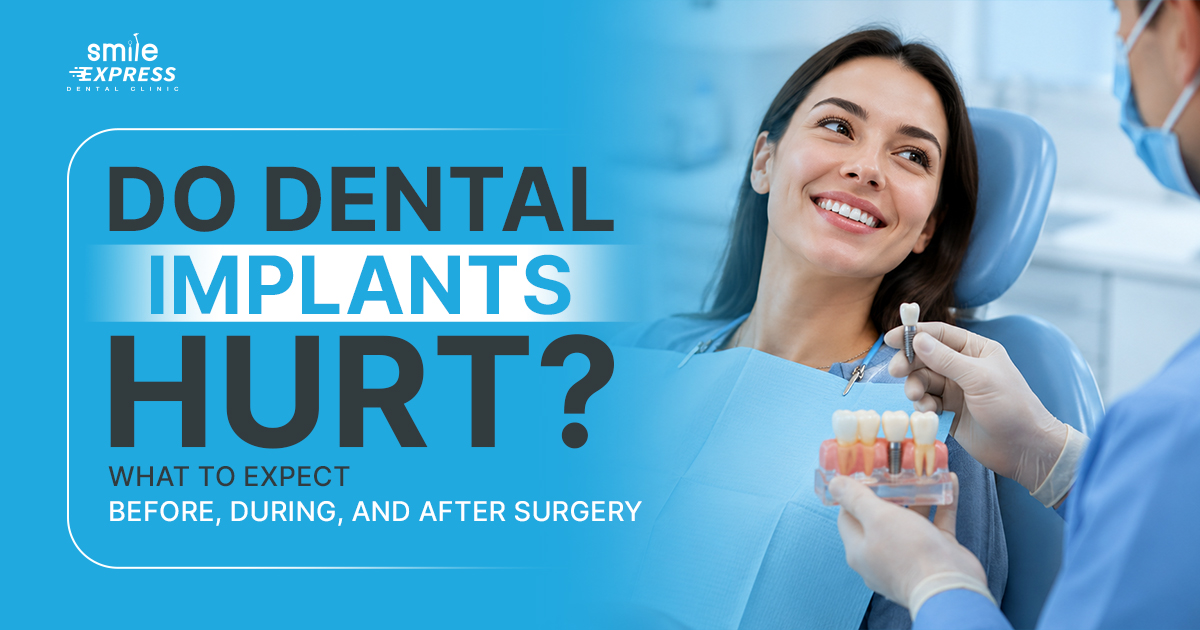
One of the biggest concerns patients have before dental implant surgery is simple:
“Will it hurt?”
Many people imagine severe pain, a difficult recovery, or weeks away from work. In reality, modern dental implant treatment is carefully planned and surprisingly manageable for most patients.
Thanks to advanced imaging, precise surgical techniques, and modern anesthesia protocols, most patients report that implant treatment is far more comfortable than they expected.
In this guide, you’ll learn:
- Whether dental implant surgery is painful
- What you’ll feel during the procedure
- What recovery is really like
- How implant pain compares to tooth extraction
- When discomfort is normal—and when it isn’t
Does Dental Implant Surgery Hurt During the Procedure?
The short answer is no.
Dental implant placement is performed under local anesthesia, which completely numbs the treatment area before surgery begins.
Most patients do not feel pain during the procedure. Instead, they may notice:
- Pressure
- Gentle vibration
- Movement
- Sounds from the surgical instruments
If you feel discomfort at any point, your dentist can administer additional anesthesia before continuing.
Many patients are surprised to find that dental implant surgery feels easier than they expected.
Is Dental Implant Surgery More Painful Than Tooth Extraction?
Many patients assume implants are more painful than having a tooth removed.
In reality, many dentists find the opposite is true.
| Tooth Extraction | Dental Implant |
|---|---|
| Damaged tooth is removed | Artificial tooth root is precisely placed |
| Often involves more tissue trauma | Controlled, minimally invasive procedure |
| Larger wound | Smaller surgical site |
| Recovery can be more uncomfortable | Usually mild to moderate discomfort |
Many patients report that implant placement is actually more comfortable than tooth extraction.
What Happens After Dental Implant Surgery?
Once the anesthesia wears off—usually within 2–4 hours—it’s normal to experience:
- Mild to moderate soreness
- Minor bleeding
- Swelling
- Slight bruising
Your dentist may recommend:
- Prescription pain medication
- Anti-inflammatory medication
- Ice packs during the first 24 hours
Most discomfort is temporary and improves steadily over the following days.
Dental Implant Recovery Timeline
| Recovery Period | What to Expect |
|---|---|
| First 24 hours | Mild soreness, minor bleeding |
| Days 2–3 | Swelling usually peaks |
| Days 3–5 | Pain and swelling gradually improve |
| Around 1 week | Most discomfort has significantly decreased |
| Several months | Implant fully integrates with the jawbone |
For a single implant, many patients return to normal daily activities within 1–2 days.
More complex procedures such as All-on-4® or All-on-6® may require additional recovery time.
When Is Dental Implant Pain Not Normal?
After healing is complete, dental implants should not cause ongoing pain.
Persistent or worsening discomfort may indicate a problem such as:
- Infection
- Peri-implantitis
- Excessive bite pressure
- Loose implant components
Contact your dentist immediately if you experience:
- Severe pain that worsens after several days
- Fever
- Pus or discharge
- Persistent bleeding
- A loose implant
Early treatment can prevent more serious complications.
When Can You Return to Work?
Recovery depends on the complexity of your treatment.
1. Single Dental Implant
Most patients return to work the following day.
2. Multiple Implants
Light activity is usually recommended for 2–5 days.
3. Full-Arch Implant Treatment
Patients undergoing All-on-4® or All-on-6® should allow extra recovery time before returning to strenuous activities.
Avoid heavy lifting and vigorous exercise during the initial healing period.
Travel Tips for International Patients
If you’re travelling for dental implant treatment, planning ahead can make recovery more comfortable.
We recommend:
- Staying near the clinic for several days after surgery
- Attending all scheduled follow-up appointments
- Avoiding immediate long-haul flights after major procedures
- Allowing a few extra recovery days before travelling home
These steps help ensure a smoother healing process and reduce the risk of complications while abroad.
Why Modern Dental Implant Surgery Is More Comfortable Than Ever
Modern implant dentistry has advanced significantly over the past decade.
Today’s treatment often includes:
- CBCT 3D imaging
- Digital implant planning
- Guided implant surgery
- Precise surgical instruments
- Advanced local anesthesia techniques
These technologies allow dentists to perform implant surgery with greater precision, less trauma, and faster recovery.
Frequently Asked Questions
Is getting a dental implant worse than having a tooth pulled?
For many patients, no. Dental implant surgery is often reported to be less uncomfortable than tooth extraction because the procedure is highly controlled and minimally invasive.
How long does pain last after dental implant surgery?
Most patients experience mild discomfort for a few days, with noticeable improvement after the first week.
When should I call my dentist after implant surgery?
Contact your dentist if you experience severe pain, fever, persistent bleeding, swelling that continues to worsen, or if the implant feels loose.
Can I go back to work after dental implant surgery?
Most patients with a single implant return to work the next day, while more extensive procedures may require several days of rest.
Can I fly after dental implant surgery?
It depends on the complexity of your procedure. Patients undergoing major implant treatment should discuss travel plans with their dentist before booking flights.
Concerned About Dental Implant Pain?
Every patient is different, which is why a personalized consultation is the best way to understand what to expect.
Our experienced implant team uses advanced digital planning and minimally invasive techniques to make treatment as comfortable as possible.
Book your consultation today and let us create a treatment plan tailored to your smile. Click to book now: https://www.dentalsmilebangkok.com/contact-us/